
Commercial solar · Chicagoland
The 30% federal solar credit ends December 31, 2027.
Your building can still make the window. Green Attic Solar designs and installs commercial rooftop solar across Chicagoland, and for most owner-occupied buildings, stacked incentives can cover 90% or more of the project cost. After 2027, the federal piece is gone.
What does this mean for me?
You've probably heard the credit was ending. Here's what that actually means.
Congress ended the federal solar investment tax credit for new commercial projects. A system must be placed in service, energized and running, by December 31, 2027 to claim the 30% credit. There is no phase-down after that; it goes to zero. So the honest question isn't whether solar pencils out. It's: what happens to the math if you wait a year and 30% of the budget disappears?
Which buildings qualify?
Built for buildings that work for a living.
Warehouses, manufacturing, cold storage, logistics, flex and office, especially along the I-55 and I-88 corridors, I-294, and I-90 west toward Rockford. Big flat roofs over real daytime loads are where the numbers get almost unfair.
- You own the building and occupy it: you capture both the incentives and the bill savings.
- Your ComEd bill runs $2,000+/month, mostly daytime load.
- Your roof has 10+ years left, or needs work, which we handle in the same project.
- Your business has taxable income to put the credit and depreciation against.
Don't check every box?
Tenants, thin tax appetite, or no desire to own equipment: roof-lease and PPA structures exist where a third party owns the system and you simply buy cheaper power. We'll show you both paths and let the numbers decide.
What incentives do I qualify for?
Four incentives, plus the bill you stop paying.
These aren't estimates we made up: they're the published 2026–27 program numbers for ComEd territory. Four incentives and one very real fifth benefit: the electricity you stop buying. It sounds too good to be true, which is exactly why we show the honest version, taxes and timing included. Want every program in full detail? Read our 2026 Illinois commercial solar incentives guide.
Federal tax credit: §48E
Full 30% for systems under 1 MW, no wage-compliance strings. Claimed on your first return after energizing. Placed-in-service deadline: Dec 31, 2027.
Year-one bonus depreciation
Now permanent. Write off the full depreciable basis in year one, worth roughly another quarter of system cost for a profitable business.
Per REC: Illinois Shines
A 15-year state-administered contract pays you for every megawatt-hour your roof produces, and most of the cash arrives within about six years of energizing. Blocks are open for the 2026–27 program year.
ComEd distributed generation rebate
Upfront cash after interconnection. Batteries earn their own $250/kWh on top.
Added property tax
Illinois assesses on-site solar at no more than an equivalent conventional system: the array doesn't inflate your assessment.
The bill you stop paying
~125,000 kWh a year at ComEd's blended commercial rate (~12¢) is roughly $15,000 you stop paying annually: on the order of $150,000 over ten years, before rate increases. We size to what your building actually consumes, since exports earn less than they used to.
What does it look like in practice?
Two real-world sizes, same math.
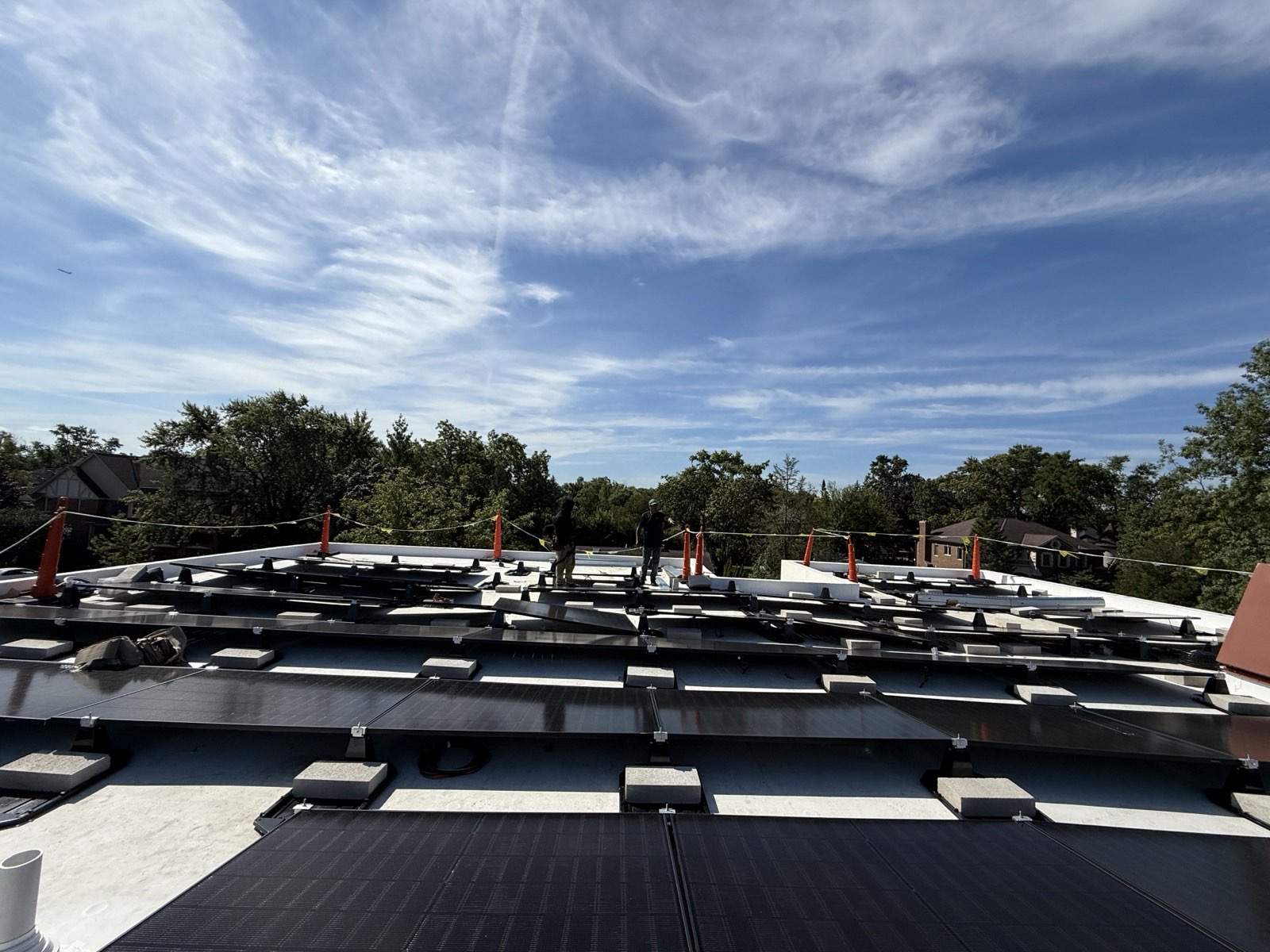
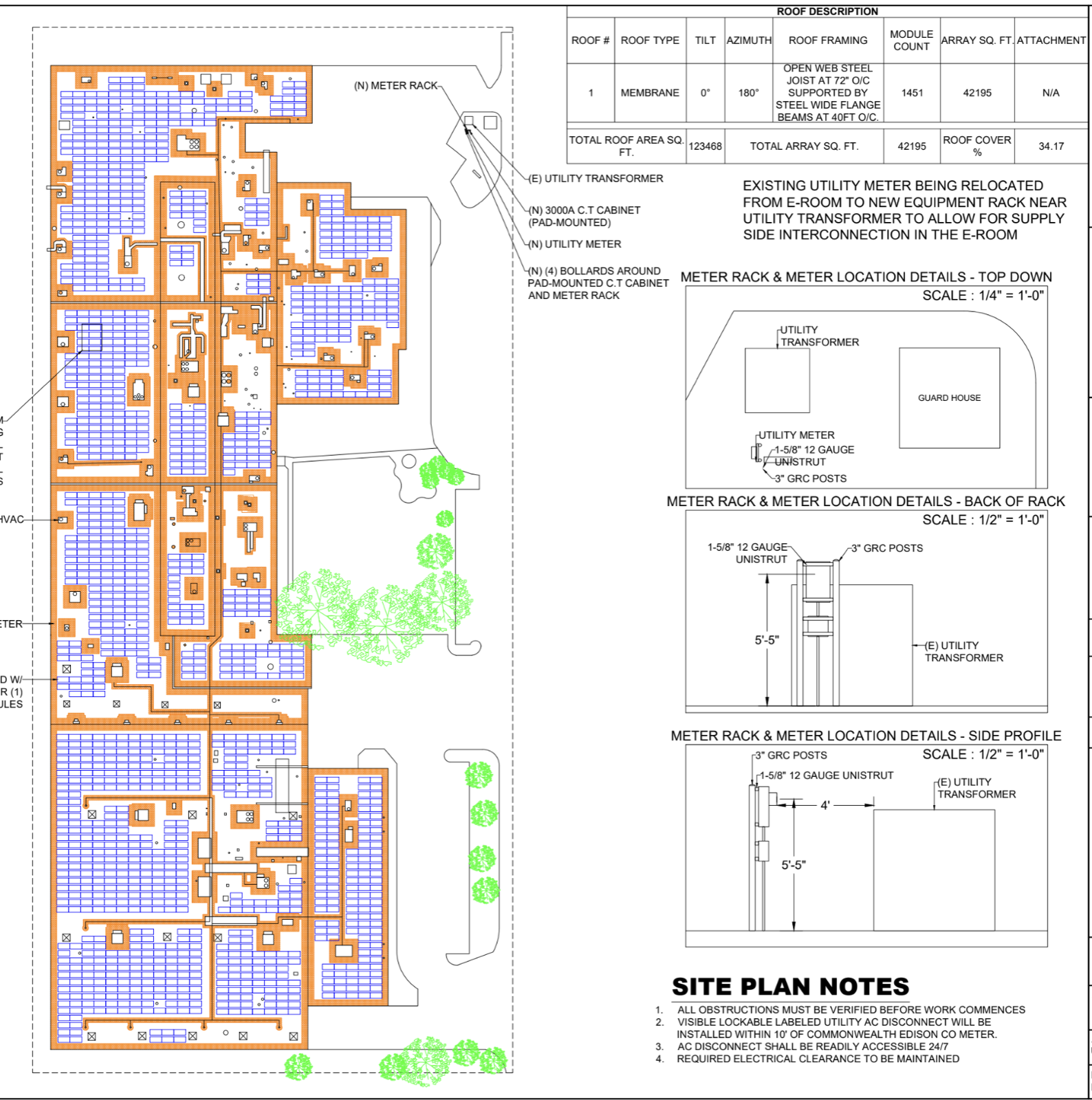
| Assumes ~$300,000 gross cost, ~125,000 kWh/yr production, published PY2026–27 rates. Footprint: ≈168 × 595 W bifacial panels, American-assembled, roughly 10,000 sq ft of flat roof. | ||
| Incentive | Nominal value | When it arrives |
|---|---|---|
| Federal ITC: 30% (§48E) | $90,000 | First tax return after energizing |
| 100% bonus depreciation (tax value) | ~$73,000 | Year one, against taxable income |
| Illinois Shines RECs ($59.53/REC, Group A) | ~$110,000 | 15% at energization, rest over ~6 years |
| ComEd DG rebate ($250/kW) | $25,000 | After interconnection approval |
| Total nominal incentive stack | ~$298,000 | vs. ~$300,000 gross cost |
| Assumes ~$3.0M gross cost, ~1,375,000 kWh/yr production. Footprint: ≈2,350 panels across roughly 140,000 sq ft of roof. | ||
| Incentive | Nominal value | When it arrives |
|---|---|---|
| Federal ITC: 30% (§48E) | $900,000 | First tax return after energizing |
| 100% bonus depreciation (tax value) | ~$730,000 | Year one, against taxable income |
| Illinois Shines RECs ($42.37/REC, Group A) | ~$875,000 | 15% at energization, rest over ~6 years |
| ComEd DG rebate ($250/kW) | $350,000 | After interconnection approval |
| Total nominal incentive stack | ~$2,855,000 | vs. ~$3,000,000 gross cost |
Program figures verified July 2026 against the published Illinois Power Agency PY2026–27 REC prices and ComEd's distributed-generation rebate rates.
What if my roof is old?
Old roof? That's not a problem: that's timing.
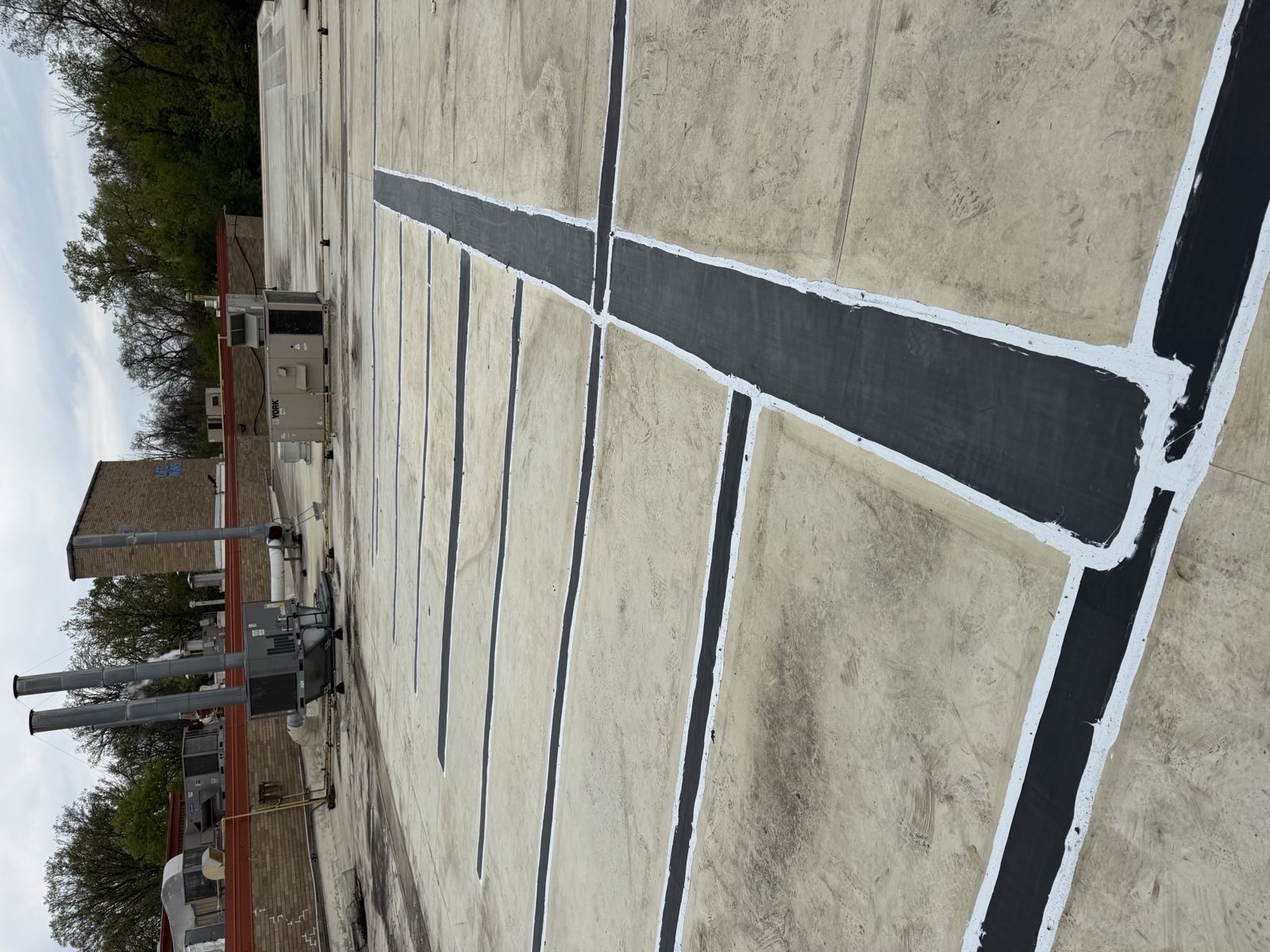
If your membrane is near end of life, we replace it with bright white TPO in the same mobilization as the array, one crew, one schedule, one warranty conversation instead of two contractors pointing at each other.
And a white roof isn't just a new roof. The bifacial panels we install collect light from both faces: the reflective white membrane feeds the back side, so the same panels generate more. New roof, more production, one capital decision.
How long does a project take?
Six to twelve months, door to energized.
Now: fall 2026
Assessment & design
Free roof and bill review, system sizing to your actual load, incentive modeling for your address.
Winter 2026–27
Permits & applications
Illinois Shines application, ComEd interconnection and rebate filings, structural review, permitting.
2027
Installation
Roof work (if needed) and array installation in one mobilization, weeks on site, not months.
Before 12/31/2027
Energized
System placed in service. The 30% credit is locked on your next tax return, and REC payments begin.
Who handles the paperwork?
You sign one contract. We carry the paperwork.
How much of your team's time can a construction project really have? Right: that's why we run the whole thing end to end, the same way we handle every commercial job we contract.
- ComEd interconnection application, filed and chased to approval
- Illinois Shines registration and your 15-year REC contract
- ComEd distributed-generation rebate filing
- Complete tax-credit documentation package for your CPA
- Permits, structural review, and county assessor filing
- Prevailing-wage certified crews, required over 1 MW, standard on our jobs
- Licensed, insured, and registered with Illinois Shines
- FEOC-compliant equipment sourcing, documented so your credit survives an audit
Why Green Attic?
On Chicagoland roofs since 2009.
Green Attic Solar is part of the Green Attic family of companies: insulation, roofing, and solar for Chicago and its suburbs. We're local, family-owned, and we'll still be here when your REC contract pays its last check.
serving Chicago & suburbs, since 2009
customer reviews across Google, BBB, Angi & more
BBB accredited & rated
Certified Installer: Solar Roof & Powerwall
What if I don't have a warehouse?
Own a home instead? Still works.
Solar isn't only for commercial buildings. Homeowners can't claim the federal tax credit anymore, but Illinois Shines is still real money, and we deduct its full value upfront, right off your contract price, with ComEd's rebate on top. You don't wait years for the state's checks; we do. And if you want options: we're a Tesla Certified Installer: Solar Roof, Powerwall, and other solar solutions for your home.
Ask about home solar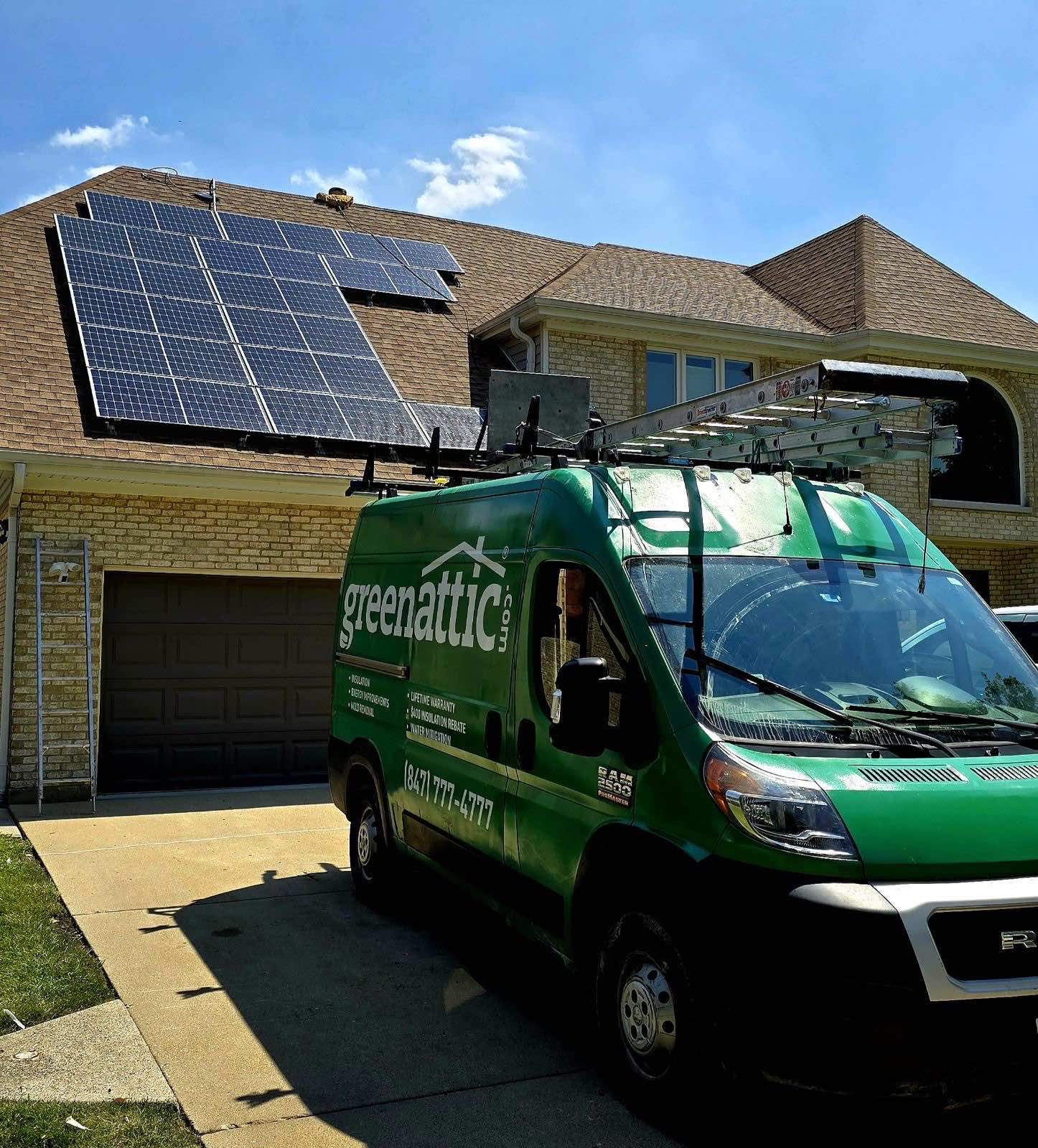
Still have questions?
The things people actually ask.
Is the 30% federal credit really ending?
Yes. For new commercial projects, the system must be placed in service by December 31, 2027 to claim the §48E credit. After that date there is no federal solar tax credit: not a smaller one, none. That's why timelines matter more than they used to.
How long does a commercial project take?
Typically 6–12 months from first site visit to energization: assessment, engineering, Illinois Shines and interconnection applications, permits, then weeks (not months) of on-site work. Starting in 2026 leaves comfortable margin; starting late in 2027 doesn't.
What happened to net metering?
Full retail net metering ended for new Illinois systems in 2025. Exports now earn the supply rate only, which is why we size systems to your building's own consumption first, and why batteries (with their own $250/kWh ComEd rebate) are worth a look for the right load profile.
Will solar raise my property taxes?
No. Illinois law assesses an on-site solar system at no more than the value of an equivalent conventional system, so the array doesn't inflate your building's assessment. We handle the assessor filing as part of the project.
Does it matter where the equipment comes from?
Yes, new federal sourcing rules can disqualify the credit if equipment contains restricted foreign content. We design with compliant equipment and document sourcing so your credit survives an audit.
My roof is 20 years old. Problem?
It's the first thing we check, before quoting anything. If the roof needs replacement, we price roof + solar as one project, one crew, one warranty conversation. The roof work belongs in the same capital decision.
What does the assessment cost?
Nothing. You get a load analysis from your actual bills, a roof condition report, and an incentive model for your specific address. If the numbers don't work, we'll say so: a bad-fit project helps neither of us.
Ready for your numbers?
What would you want to know before deciding?
Send the basics and we'll come back with numbers for your building: production, incentives, payback, plus a straight answer on whether your roof can make the 2027 window.